Commercial Waste in Brimsdown
Commercial waste in Brimsdown needs a service that is straightforward, compliant and suited to the way local premises actually work. Our focus is the collection and removal of business waste from shops, offices, workshops, warehouses and other commercial settings, with an emphasis on separating reusable, recyclable and non-recyclable material where possible. The aim is to keep premises clear without turning the process into a disruption for staff, customers or deliveries.
We handle routine clearances and one-off loads of mixed business waste, including office items, packaging, fixtures, shelving, and general non-hazardous rubbish that has built up through day-to-day trading. When a site needs a dependable clean-down, we can deal with the material in a way that suits the size of the load, access on site and the type of waste involved. If you are comparing options, it is sensible to ask for a quotation and describe the job as clearly as you can.
For a quick start, keep the enquiry simple: what needs removing, how much there is, and whether the waste is inside or outside the building. Photos are helpful when the load is mixed or spread across more than one room, and details about access can help the collection be planned properly. If you are ready to move ahead, make contact for a quotation and we will help you work out the most suitable approach.
Business waste removal for everyday operations
Business waste removal is often the most practical solution when a company generates material that no longer belongs in the working environment. This can include paper archives that are no longer needed, damaged packaging, old stock, broken display items, worn storage materials and general refuse from offices or trading units. A sensible service keeps the flow of waste under control, rather than leaving staff to manage a growing pile that gets in the way of normal use.
The best results usually come from separating the waste into manageable groups before it is taken away. That may mean keeping cardboard apart from mixed rubbish, or identifying items that should be handled as specialist material rather than ordinary commercial waste. In some cases, a simple list is enough; in others, a site visit or clear photographs make the load easier to describe. Business waste removal can be arranged around the scale and type of material, so the collection matches the premises rather than forcing the premises to fit the service.
What usually forms part of a collection
- Bagged office and trade waste
- Cardboard, packaging and mixed recyclables
- Small amounts of unwanted fixtures or fittings
- General clear-out material from storerooms and work areas
- Items that are being removed as part of a wider tidy-up
Office waste and workplace clearances

Offices generate waste in different ways from retail units or storage premises, so office waste collection often needs a more measured approach. Desks, chairs, filing units, screens, shelving, bags of paper, boxed equipment and outdated furniture can all create a clearance job that is larger than a simple bin collection but smaller than a complete building strip-out. A well-planned removal helps keep exits, corridors and workspaces usable while the job is completed.
We also help with office clearances where the goal is to remove redundant items in one visit rather than spread the task out over several smaller jobs. That can be useful during a relocation, refurbishment, lease end or general declutter. If the waste includes confidential material, it is important to separate it from ordinary rubbish and deal with it in the right way. Office clearance is best planned around the rooms involved, the access available and any items that need special attention.
Before asking for a quotation, it helps to note whether there are stairs, lifts, narrow corridors, loading restrictions or timed access. Those details can affect how the collection is arranged, especially where larger office furniture or stacked waste needs to be moved safely. If the load is spread through several floors, a simple room-by-room outline can keep the work efficient and reduce the chance of missed items.
Furniture, fixtures and bulky items
Commercial premises often accumulate furniture and bulky items that still take up valuable space even when they are no longer useful. Reception desks, tables, shelving, cupboards, chairs and display units may need to be removed during an upgrade, rebrand or internal change of use. In some businesses, old furniture remains in storage long after it has stopped serving a purpose, which can make back rooms and staff areas harder to use effectively.
Bulky item removal is usually easier when the items are identified in advance and grouped by room or by type. That makes it simpler to decide whether the work is a straightforward collection or part of a larger clear-out. Where appropriate, the furniture can be taken away alongside other non-hazardous commercial waste so the site does not need several separate visits. Furniture disposal is a sensible option when items are no longer suitable for reuse inside the business and need to be cleared with minimal fuss.
We can also handle mixed loads where furniture sits alongside packaging, small appliances or general waste. The important point is to be clear about what is present, because bulky items may affect access and loading even when the rest of the waste is light. A practical quotation depends on the amount to be removed, the type of materials and the ease of reaching them.
Clearance for storage areas, back rooms and stock spaces
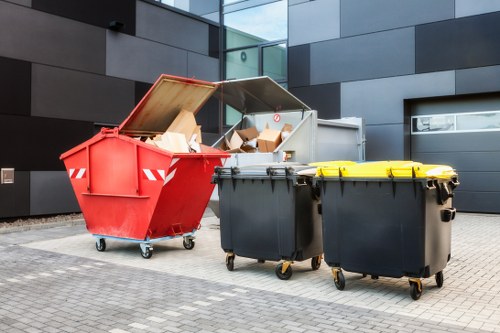
Storage spaces and back rooms often become the catch-all area for items that are waiting to be dealt with, which means they can quickly fill with redundant stock, packaging, offcuts and unused equipment. Clearing those spaces can make inventory easier to manage and reduce the time staff spend navigating around old material. It is also a useful way to reset areas that have drifted away from their intended use.
Our service can cover garage-style storage units, stock rooms, basement storage and other commercial back-of-house spaces where waste has built up gradually. In many cases the task is not just about removing items but about sorting the load into sensible categories so that the clearance is not more disruptive than it needs to be. Garage clearance and related storage clearances can be matched to the size of the space and the mix of material found there.
If the room contains a mixture of business records, packed goods, broken shelving and general rubbish, it is worth listing those categories when requesting a quotation. That gives a clearer picture of the work involved and helps avoid assumptions about what can be removed in one go. A good description is more useful than a vague “clear the room†instruction, especially where the contents have built up over time.
Waste handling for retail, trade and light industrial premises
Retail and light industrial sites can generate commercial waste that is awkward to manage through ordinary bin arrangements. Packaging, damaged goods, display fittings, end-of-line stock and mixed operational rubbish may need a collection that reflects the realities of the premises. The objective is to remove the material without creating new problems for trading, such as blocked access points, cluttered loading bays or waste left in customer-facing areas.
For these premises, timing and access often matter as much as the waste itself. If goods are moved in and out during the day, the clearance needs to fit around that flow rather than interrupt it. Where a site has recurring waste or a larger seasonal build-up, it is helpful to explain the pattern so the service can be scaled appropriately. Waste removal offers a flexible starting point when the load is commercial, mixed and not neatly confined to one category.
Commercial waste work is most effective when the customer can say what should stay and what should go. That is especially important in shared units, warehouses with segregated bays or premises where some equipment is still in use. Clear instructions reduce the chance of accidental removal and make it easier to prioritise the material that is genuinely ready to leave the site.
Special handling for appliances and other specific items
Some business waste needs a more specific approach than general rubbish. Refrigeration units, drinks fridges, kitchen appliances and similar items may be bulky, heavy or awkward to move, while also requiring the right sort of handling once removed. Even when these items are not the main part of the job, they can shape the planning because they often need extra space, careful lifting and a clear route out of the building.
We can help where such items form part of a broader commercial clearance, provided the waste remains within the scope of the service and is suitable for the intended handling route. If you have mixed material, it is sensible to identify any appliances separately so the quotation reflects the real job. Fridge and appliance removal can sit alongside other business waste when the premises need a fuller tidy-up rather than a single-item collection.
Likewise, furniture and bulky items often travel together with older equipment or out-of-date stock. The practical point is not to split the job unnecessarily; it is to describe the load honestly so the collection can be organised in one coherent visit where possible. That keeps the process simple for the customer and more predictable for the site.
Planning a quotation for commercial waste

A quotation for commercial waste is usually clearer when the load is described in a structured way. Start with the type of premises, then note the main items to be removed, and finally explain anything that affects access or loading. If the waste is scattered across several rooms or floors, a brief room list is often better than a single sentence. This is especially useful where the job includes both general waste and larger items such as desks or cabinets.
There are a few details that help a quotation feel accurate without becoming complicated: whether the waste is inside or outside; whether there are stairs, lifts or parking constraints; and whether the material is already bagged, stacked or sorted. If you are unsure what counts as commercial waste, it is usually best to list the contents plainly and let the service be shaped from that description. You can also pricing and quotes page to understand how enquiries are handled before you send details.
When you are ready, the simplest next step is to ask for a quotation with a short description of the work. That gives you something concrete to compare and makes it easier to decide whether the collection should be arranged as a one-off clearance or part of a wider tidy-up plan.
Recycling, sorting and responsible disposal
Commercial waste should be handled with an eye on what can be separated before disposal. Cardboard, certain packaging, metals and reusable items may all follow different routes from mixed rubbish, and that sorting can make the overall clearance more efficient. The aim is not to overcomplicate the job, but to avoid sending everything down the same line when a more careful approach is practical.
Where a business wants to understand how its waste is treated, it is worth asking about the disposal route for the main material types. That is especially relevant when a load contains office items, furnishings, fixtures or mixed stock that could be handled differently from bagged rubbish. Recycling and sustainability is the natural place to look when the priority is to keep the clearance sensible as well as tidy.
Not every load can be broken down into neat categories, and that is fine. Mixed waste still needs to move out of the premises efficiently, but a few minutes spent identifying the obvious recyclable material can make the process more orderly. A balanced approach is often the most realistic one for busy commercial sites.
About Brimsdown
Brimsdown is an area in the London Borough of Enfield, in north London, shaped by a mix of residential streets, industrial land and transport connections. It lies close to the Lee Navigation and the wider River Lea corridor, a landscape that has long influenced the development of the lower Lea Valley. Much of the area’s modern character reflects its industrial and logistical uses, with rail infrastructure, warehouses and trading estates sitting alongside housing and local roads. The railway station gives the district a clear connection to the rest of the capital, while the surrounding network of waterways, embankments and industrial plots speaks to the area’s working past. Like many parts of the Lea Valley, Brimsdown combines functional modern land use with traces of earlier settlement and industry, creating a place that is more practical than picturesque but still distinctive in its own right.
Commercial waste clearance shaped around the premises
Every business site has a different rhythm, and the waste solution needs to respect that. A workshop with stacked offcuts, a shop with out-of-date fittings, and an office with redundant furniture all need the same broad outcome — clear, manageable space — but they need to get there by different routes. That is why it helps to talk about the premises as well as the waste itself. It allows the collection to be planned around the realities of doors, loading points, floors and the amount of material involved.
Business waste removal can be combined with a wider clearance when the site needs more than a simple bin emptying approach. The same is true of office, furniture and storage-area waste, which often appear together in one project. Rather than treating each category as a separate problem, a coordinated clearance can deal with the whole load in a more organised way.
If you want to move forward, the best next step is to make an enquiry with a short summary of the waste, the location on site and any access notes. That is enough to begin a sensible quotation and gives you a clear basis for deciding how to proceed.
Common commercial loads and practical choices

Commercial waste is rarely limited to one tidy category, so the choice of service often depends on the mix of materials present. In some cases the load is mostly light rubbish and packaging; in others it is mainly furniture, fixtures or obsolete equipment. A practical service should reflect that mix rather than forcing the customer into a narrow idea of what a clearance is supposed to look like. The point is to remove the waste that is no longer needed and do so in a way that suits the premises.
Useful choices often come down to whether the job is a general collection, a room clearance or a more specific item removal. If the waste includes appliances, office fittings or bulky furniture, it may be helpful to describe those items separately so the collection can be planned in the right order. Furniture clearance can sit beside a broader commercial clearance when both the bulky items and the smaller waste need to go together.
To finish, keep your request brief but informative: say what needs removing, where it is, and whether there is anything awkward about access. Request a quotation when you are ready, and you will have a clearer picture of the work before making a decision.